







Home
   World sailboat
    production estimates
   Technical features
   Industry comment
   Current issue
   About us
   Advertise
   Subscribe
   Visit ibinews.com


Rock 'n' roll (part 1 of 2)


Andrew Blyth and Tom Nighy review the stability and buoyancy requirements of non-sailing boats.


offset
Offset load: This measures the maximum heel angle resulting when people on board the boat crowd one side.
 

In the July 2003 issue of European Boatbuilder we introduced the main concepts of stability and buoyancy assessment using the Stability Standard (ISO 12217). It was explained that this standard is divided into three parts:

  • Part 1 - non-sailing boats of hull length greater than or equal to 6m (19.7ft).
  • Part 2 - sailing boats of hull length greater than or equal to 6m (19.7ft).
  • Part 3 - boats of hull length less than 6m (19.7ft).


But why was such a division decided upon?
Firstly, sailing boats are quite obviously subject to a very much greater influence from the wind, which in itself may be sufficient to cause capsize without assistance from waves. Although other forms of boat are mostly engine-powered, rowing boats and punts are propelled by human power. Hence it was found easier to simply refer to ‘non-sailing’ boats. It is such boats that are considered here.
The second division has clearly been made at a hull length of 6m (19.7ft). This was so that builders of smaller boats, some of which may be offered in either sail or engine-propelled versions, could refer to one document. It was also considered to be appropriate as:
a) boats of under 6m (19.7ft) length will normally only be suitable for Design Categories C (inshore) or D (sheltered waters), thus reducing the number of hazards that need to be considered;
b) practical tests and measurements are generally preferable, whereas over this length calculation is often easier.
A boat of under 6m (19.7ft) may be assigned Design Category A or B if it satisfies the relevant requirements for boats of over that length.
The 6m (19.7ft) limit was also adopted because this length is referred to in the wording of the Recreational Craft Directive — and in some other legislation — in connection with the provision of flotation when swamped.
While this article will be of general interest to people involved in building boats, those wishing to assess the stability of a specific boat will need access to the various standards referenced in it.

What is a non-sailing boat?
It is simply any boat other than a sailing boat! But if fitted with steadying sail, it will have a sail area in square metres that is less than 0.07 times the fully loaded mass (displacement) in kilograms raised to the power of two-thirds. The table above illustrates what this means in practice.
Approximate intermediate values can be obtained by interpolation. If in doubt, check using the formula.


Hazards for non-sailing boats
All forms of non-sailing boats are exposed to the following hazards:
a) filling with water when upright, due to insufficient freeboard or watertightness of decks or closures;
b) filling with water when heeled, either over the gunwale or through openings in the hull;
c) capsize or excessive heel due to movement of the people onboard, or in a few cases the wind;
d)
capsize due to the effects of waves (principally in Design Categories A and B).
Those boats with a lot of top hamper also need to consider the heeling effect of the wind.
Different styles of boat counter these hazards in different ways, and the standard allows for this by providing a table of options (Table 2 in Part 1, Table 3 in Part 3). A designer or builder can elect to use any one of them provided that all the requirements of the selected option are satisfied.

Some terms explained
‘Downflooding height’ is the height to the point at which water can first enter the interior (non-draining) part of the boat.
‘Downflooding angle’ is the angle of heel in calm water at which downflooding begins. Requirements are specified to provide a suitable margin for rolling above the heel angle attained in the Offset Load Test which will be dealt with later. For boats under 6m (19.7ft) length, this is expressed as a minimum residual freeboard measured during this test.
‘Quick-draining’ is the term applied to a cockpit or other recess that complies with the Cockpit Standard (ISO 11812), which covers maximum drainage time, height of cockpit sole and sills and watertightness of the periphery. This standard will be described more fully in a future European Boatbuilder article.
‘Watertightness’ is the degree of resistance to water leakage, and is defined in the Doors and Windows Standard (ISO 12216) by four ‘degrees’ represented by four decreasingly severe requirements as follows:
a) Degree 1 is suitable for continuous immersion.
b) Degree 2 is suitable for temporary immersion.
c) Degree 3 provides protection against splashing.
d) Degree 4 provides protection for water falling at up to 15 degrees from the vertical — meaning rain!
‘Flotation elements’ are devices fitted to make the boat float with adequate buoyancy and stability after being swamped. They may be air tanks or inflated elements such as RIB collars, buoyancy bags or parts of the craft filled with low-density materials such as foams.

Fully decked boats
According to the Stability Standard, a fully decked boat is one in which the plan area comprises a watertight deck and/or coachroof fitted with closing appliances that meet the Doors and Windows Standard, in which recesses are either quick-draining according to the Cockpit Standard, or watertight and of very limited volume.
Such non-sailing boats are considered suitable for any of the four Design Categories provided that:
a) they meet the requirements for integrity of downflooding openings, freeboard to downflooding, downflooding angle and offset load;
b) for Design Categories A and B they meet the requirements for resistance to waves and wind, which include limitations on the size of recesses in the weather deck;
c) for Design Categories C and D, and if the above-water profile area is more than the length times the beam, they meet the requirements for heel due to the wind.
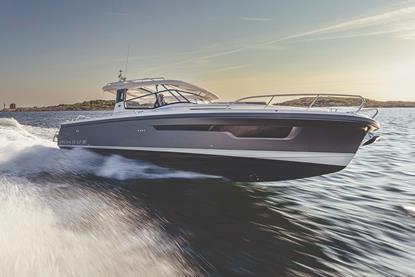
Most motor cruisers are fully decked boats and should be assessed using Options 1 and 2 in Part 1 and Option 2 in Part 3.

Partially decked boats
As defined in the Stability Standard, a partially decked boat is one in which at least two-thirds of the plan area is covered by watertight decking or shelters designed to shed water overboard. This area must include the forward third of the boat length as well as 100mm(3.9in) around the remaining periphery. Such boats are considered suitable for Design Categories C or D if they are at least 4.8m (15.8ft) long. Under this length they must be treated as un-decked boats, and often require flotation to be fitted (see below).
Such boats have specific requirements in Option 5 of Part 1 and Option 4 of Part 3, with regard to:
a) watertightness of openings;
b) freeboard to downflooding and downflooding angle;
c) heel angle under offset load;
d) heel due to the wind, if the profile area is more than the length times the beam.
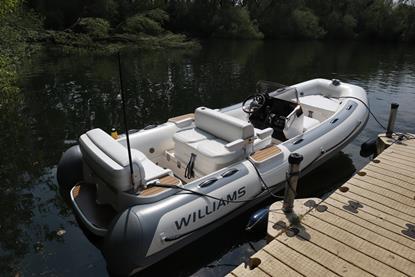
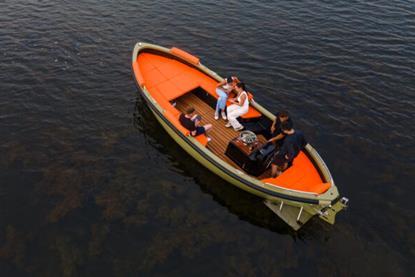
This group includes many open launches.
Un-decked boats without flotation
Boats with limited or no decking at all are vulnerable to swamping unless they have generous freeboard in relation to the wave height of their Design Category as well as good residual freeboard even when heeled under offset load. Provided these relatively tough requirements are met, then no flotation elements are required. Such boats must be at least 4.8m (15.8ft) long and are addressed by Option 6 in Part 1 and Option 5 in Part 3.
Open launches under 6m(19.7ft) in length are limited to Design Category D, whereas over this length they can be assigned either Category C or D.

Un-decked boats with flotation
If a boat is un-decked and has limited freeboard it is vulnerable to swamping. Therefore, it must be provided with flotation to protect the occupants if swamping does occur. Several options are available to such boats:
a) Option 4 of Part 1 and Option 1 of Part 3 in addition to requirements for downflooding height, downflooding angle and offset load, include requirements for both buoyancy and stability in the swamped condition. The minimum required downflooding height is naturally less than if no flotation were fitted. This choice is used for most dinghies and powered runabouts to achieve Design Categories C or D;
b) Because it was considered impractical for inboard powered boats of under 6m (19.7ft) to achieve the ‘level flotation’ standard required by the above option, such boats of over 4.8m (15.8ft) are permitted to comply with the ‘basic flotation’ concept (which ensures that the boat will float, but may do so at any angle) provided that handholds are provided for people in the water to hold onto the boat. Option 6 of Part 3 allows either Design Categories C or D to be attained;
c) For consistency with the sailing boat requirements, Option 3 of Part 3 allows un-powered boats or boats with a motor of less than 3kW power to comply with Category D if it can be shown that the user can right the boat after a capsize and subsequently bail it dry. In this instance there is a minimum downflooding height but no need to satisfy offset load. As with small sailing dinghies, such boats must be fitted with prominent warning labels to alert the owner to the possibility of inadvertent capsize.


For Part 2 click here


  back to main Technical features page    Top


©European Boatbuilder Read our Terms and Conditions here | Privacy Policy


w