





The biggest impediment to more widespread adoption of electric propulsion may lie in the way we position battery capacity, with a continual focus on operation at wide open throttle. Could education to better inform buyers’ attitudes be the key to adoption gains?

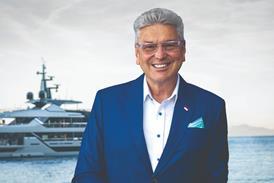
Selling electric power to reluctant consumers requires a focus on more than just full throttle performance, says Flux Marine CEO Ben Sorkin

Selling electric power to reluctant consumers requires a focus on more than just full throttle performance, says Flux Marine CEO Ben Sorkin

In boat markets around the world, it appears that a number of consumers remain sceptical of electric propulsion platforms, primarily out of fears that current battery systems can’t provide enough power to meet their needs. Continuous improvements in battery technology and the efficiency of electric propulsion systems are critical in addressing range anxiety concerns, but perhaps even more important is a need for the boat sector to better manage expectations related to electric propulsion – particularly as new cohorts of consumers enter the recreational boating market.

Mercury data shows most prospective electric motor buyers over-estimate their actual power and range needs

Mercury data shows most prospective electric motor buyers over-estimate their actual power and range needs

Whether current generation electric propulsion systems represent viable alternatives to fossil fuel engines depends entirely on usage and buyer expectations, says Mercury Marine vice president of category management, Steve Andrasko. Mercury’s SmartCraft platform has enabled the company to amass several years’ worth of data on boat usage since its introduction in 2001, and he says that data confirms that electric propulsion systems are capable of meeting the needs of boat buyers in a wide variety of applications. “By leveraging user duty cycle data collected by our dealer service tool, as well as hours accumulated by our VesselView Mobile users, we are able to observe actual user behaviour. Through voice of the customer interviews, we also have a strong understanding of how boaters in similar applications think they are using their boats,” he says. “What we find is that the vast majority of boaters greatly over-estimate their actual power and range needs. For many boaters, a day on the water includes very little active boating time. They boat to the sandbar, restaurant, or any adventure destination and remain anchored or moored for most of the day. The anxiety regarding not being able to drive at full-throttle all day is not founded for a majority of users based on our data.”

A need for boater education

A priority for the industry, says Andrasko, is to proactively address misconceptions around boat use in order to better manage buyer expectations.

“Mercury’s initial product lineup in the electric category aligns with our knowledge of specific, but very common user types,” he says. “With today’s battery technology, applications like small tenders and inland lake pontoons are very well suited for electric propulsion. Ferrying passengers and supplies to a larger cruiser is a perfect and more convenient fit for electric propulsion than ICE. Pontoon boats that are used for evening dinner cruises and sight-seeing are also a perfect fit, our data shows most journeys are three hours or less at very low power.”

Boats operate at different speeds over the course of a day, that’s why they have a throttle and not just an on-off button

Andrasko notes that Mercury typically configures its Avator packages with enough battery to provide around one hour of power at wide open throttle, which translates to about 10 hours of power at more modest speeds. This, he says, reflects typical usage patterns among buyers of ICE outboards with comparable power outputs. Additional batteries can further extend that range, if required.

Mercury Avator hero 2

“Addressing range anxiety concerns is very much a matter of communication and education” says Andrasko. “Obviously, there are some usage scenarios where the boat does run at high speed for much longer periods, and in those cases, current electric propulsion technology is not an appropriate solution. But in many, many cases consumer anxiety over power and operating range needs a more data-driven understanding of their application’s duty cycle versus electric propulsion’s existing capabilities. With that, we expect that many will find their fears regarding range and power to be unfounded.”

Selling electric by application

Rhode Island, US-based electric motor manufacturer Flux Marine also places a heavy emphasis on buyer education in support of its overall growth strategy. But moreover, the firm takes a carefully targeted approach by focusing on geographic markets and end-use scenarios where electric propulsion likely represents the most appealing option overall, says CEO Ben Sorkin.

“Our starting point is the belief we don’t want the user to be able to discharge their battery in half an hour running at wide open throttle, because that’s just too short a time and that eliminates too many use cases,” he says. “At the same time, I don’t necessarily think you need to be able to operate for four or five hours at wide open throttle, because that just isn’t reality for the vast majority of use cases. So, we try to size the battery to provide about an hour of operation at wide open throttle, or around two hours at planing speed, which translates into near 20 hours of power at cocktail cruising speeds. For us, that’s the right amount of battery capacity and range to fulfil a huge number of use cases.”

Mercury pontoon

He adds that a common mistake in trying to sell electric motors is by focusing on estimated run time for wide open throttle scenarios alone.

“When you say the boat will run for an hour at full throttle and leave it at that, you paint a picture of this boat roaring around at top speed for an hour and then it’s all over. But that doesn’t reflect actual use patterns,” explains Sorkin. “That’s why we always make a point of saying, you’ll get this much range at full throttle, this much on plane, and this much at a cruising speed. If you focus only on the full throttle figure, then that’s all the customer remembers. And similarly, if you only talk about range at idle speed, they won’t think of the boat being able to go any faster. You need to spell out usage in more depth, and remind consumers that the minimum number you quote does not mean the end of their fun. Boats operate at different speeds over the course of a day, that’s why they have a throttle and not just an on-off button.”

Sorkin says Flux further concentrates its efforts in geographic markets best served by electric propulsion. The goal, he says, is not to position electric as the answer to all applications, but focus on markets where it clearly makes sense.

“It’s about identifying the applications where you don’t need to go more than 50 or 60 miles, to put it bluntly,” he says. “And realistically, 50 or 60 miles in a smaller boat is a long way to travel. There are tens of thousands of lakes around the world that are less than half that in size, and those are ideal markets for electric propulsion.

“When you educate the customer by getting them to think beyond just how far they can go at full throttle, you remind them that their favourite boating waters are usually small enough they can go back and forth all day long if they really want to, and you see the attitude begin to shift as electric gains greater acceptance. Then when you remind them again about the fact there’s no noise, no fumes, no emissions and no more trips to the gas pump, it becomes obvious that in many boating scenarios, electric propulsion really is the best choice.”