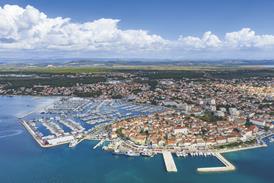
Marinas in Ireland are experiencing extremely healthy demand for berths, with operators reporting long waiting lists.
There are more than 60 coastal marinas, pontoon docks and jetties that circle the island of Ireland (North and South), with 25 coastal marinas in the Republic ranging from the 830-berth Dun Laoghaire Marina to four others with about 300 berths, to a dozen that have between 100 and 200 berths. In Northern Ireland, most of the 12 coastal marinas have a range of berths between 30 and 100. The exceptions are the larger marinas in Carrickfergus (280) and Bangor (500).
A recent survey by the Irish Marine Federation (IMF) found that in the Republic, marinas can accommodate boats of 11m in length at the lower end and 70m at the upper end. Most marina berths range between 28m-40m, though one marina has a long quay wall that can accommodate superyachts up to 120m. 65% of the respondents said that the average boat size in their marinas is between 9m and 11m, while 25% said boats in their marinas are between 7m and 9m.
Along the River Shannon’s inland waterway, there are 17 harbours and ports, with about 50 marinas, jetties and mooring areas, many managed by Waterways Ireland, while the other facilities are owned by counties and towns. A minority are under private ownership.
“Business is going really well,” says Jonathan O’Connor Moneley, general manager of the 170-berth Carlingford Marina. “Boats we haven’t seen in 10 years are now coming back. We didn’t expect to see them again after the last recession, but they’re turning up.”
Carlingford Marina is at capacity for the summer season – it recently installed finger docks to accommodate 15 more boatsand Moneley, also chair of the Irish Marine Federation, says most marina managers are reporting similar conditions. “Before Covid, we always discussed how to get that generation gap of 30- to 50-year-olds involved in boating,” he says. “Covid did that for us. Besides the people who came back, we saw a lot of newcomers who went boating or sailing for the first time during the pandemic.”
FULL CAPACITY
Christopher Noble, third-generation owner of Manor House Marine in Killadeas, County Fermanagh, is also reporting full capacity at his 150-berth facility on Lough Erne at the northern end of the River Shannon. Started by his father in 1971, the marina now has 125 berths for private boat owners, with remainder devoted to the facility’s charter-hire fleet.
Noble’s facility is located with nine other marinas on lower Lough Erne, which sits at the northern end of the River Shannon. Waterways Ireland oversees the locks and large-scale infrastructure development. It exercises control over most of the waterway’s infrastructure and public marinas, as well as being tasked with the development and expansion of marinas.
Private marina operators tend to answer to local government agencies, rather than the cross-border Waterways Ireland. Noble says that he would have to seek permission to expand his marina from the local county council. “That’s extremely difficult – almost impossible,” he says. “So, we just build on what we have.”
Marina expansion and new projects are also proving to be a challenge along the coastal areas of the Republic, where until recently, any new leases or modifications to existing leases had to be approved by the Department of Agriculture, Food and the Marine, under the Foreshore Act of 1933.
The 90-year-old decree, created six years before Ireland became a republic, allowed the government to exercise control of the “foreshore,” or the land adjacent to the sea which is covered by the tide, in order to preserve and protect waterfronts.
For marina operators nearly a century later, the Foreshore Act is considered one of the biggest challenges to operating their businesses. Many operators complain that the government body creates high and sometimes arbitrary valuations for what they pay for their foreshore leases. They also have to pay local rates, which amounts to double taxation. One marina saw its latest lease valuation go up by 3,000%.
They don’t consider how we helped create a tourist draw that helps the whole town and not just our boat owners
WAITING GAME
The department also takes years to rule on proposals for new marinas or expansions of its existing facilities. “I know one man who waited 20 years for permission,” says Bernard Gallagher, owner of BJ Marine, a boat dealer with a marina in Greystones, south of Dublin. “I also had a marina project that I invested €250,000 in, for environmental assessments and other studies. I eventually decided to drop it after not hearing a word.”
“It feels like the department thinks marinas are the goose that laid the golden egg,” said one operator.
“The Foreshore leases remain a hot topic among our board members,” adds Moneley. “One operator has five leases on his marina coming up for renewal. He has no idea how he will pay them. He thinks they could put him out of business.”
Some operators believe the government does not understand the business of running a marina – or the economic benefits marinas bring to local communities beyond the actual businesses. “We’ve seen foot traffic go from 1,000 people per week passing our marina when we first opened to 7,500,” says Fitzgerald. “They don’t consider how we helped create a tourist draw that helps the whole town and not just our boat owners.”
Wietse Buwalda, owner of Salve Marine, with a 50-slip marina in Crosshaven, Cork, has also been waiting for years for an answer about his Foreshore expansion proposal. “I have a file that is five inches thick,” he says.
Buwalda, also chairman of the Irish Marina Operators Association, sees a bigger issue beyond his marina. There were plans, he said, to develop a series of marinas along the southern and western coasts of Ireland to form a “necklace” of marinas that would link together the cruising grounds, but the proposal never got anywhere.
Help, however, could soon be on the way. A new regulatory body called the Maritime Area Regulatory Authority (MARA) is scheduled to become operational in July, following the enactment of the Maritime Area Planning Act of 2021. That act has been described as the most dramatic reform of marine governance since Ireland was founded.
The agency, which will be administered by the Department of Housing, Local Government and Heritage, will be responsible for not only planning on Ireland’s coasts, but also the waters of its Exclusive Economic Zone, up to 200 miles offshore. Most activities will revolve around wind farms that will be established to create renewable targets set by the EU. But the office will also be involved with planning and approving new marina developments along Eire’s coast, making the Foreshore Act obsolete.”
“It’s still an unknown,” says Moneley, about the new office. “But we’re hoping the proposals we put forward will get answered in months, not years. Apparently, they’re making a big effort to get the right people in place. We know we’re at the bottom of the food chain in their priorities. They’ll be focusing mostly on wind farms. But we’re cautiously optimistic about our prospects.”
Covid boom stirs the Celtic Tiger

The Celtic Tiger has been slumbering of late, its leisure marine sector long-plagued by short-sighted officialdom, but could all that be changing? The Covid boating boom has given fresh impetus to industry and to a government that shows signs of waking up to boating’s true potential. This report was conducted ...
- 1
Currently
reading
Booming demand choked by red tape. Could that all be about to change?
- 3
- 4


LinkedIn
X / Twitter
Facebook
Email us