








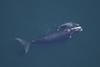
The recreational marine and sport fishing industry say the proposed rule would devastate their businesses

Four members of the US House of Representatives have asked the National Oceanic and Atmospheric Administration (NOAA) Fisheries division to suspend further action on proposed changes to the North Atlantic right whale vessel speed rule that would extend the 10kt speed limit along the Eastern seaboard to vessels 35ft and larger.

The recreational marine and sport fishing industry say the proposed rule would devastate their businesses and the economies of coastal communities.

In a letter to NOAA Fisheries Assistant Administrator Janet Coit, Democrat Rep Mary Sattler of the state of Alaska – a member of the House Natural Resources Committee who was very outspoken during an oversight hearing in June about the impact to her state’s recreational and commercial fishing interests – wrote:

“…NOAA Fisheries can and should set aside the flawed proposed rule and instead carry out the full and vigorous exploration of technological solutions that can achieve the conservation goals while still allowing reasonable access to public resources. Working collaboratively with subject matter experts who specialize in whale monitoring and detection, as well as communications systems that can get information to vessel operators where and when they need it most must remain the top priority for NOAA Fisheries. Not all of us represent Districts sitting on the East Coast, but we share concerns regarding the economic ripple effects of these restrictions and the implications for how NOAA Fisheries would conduct marine mammal protection management elsewhere in the United States.”

Peltola, the lead co-sponsor on HR 4323, a bill that would prohibit NOAA from issuing a rule that modifies or replaces the current North Atlantic right whale vessel strike reduction rule until technological solutions recently authorized by Congress can help better track whales and avoid strikes, was joined by three Democratic colleagues from the states of Texas and Pennsylvania, who have similar concerns for their ports, commercial and recreational boat traffic.

In addition to vessel safety concerns, the four House members cite Southwick Associates research that NOAA’s proposed rule changes threaten to eliminate up to 70,000 recreational fishing trips and jeopardizes the US$230bn in national economic contributions from the recreational boating and fishing industry, which supports 800,000 U.S. jobs and 36,000 businesses. In Atlantic coastal states alone 340,000 American jobs and nearly US$84bn in crucial economic activity will be in jeopardy.

“NOAA’s lack of engagement with the people who actually build and use recreational boats resulted in a seriously flawed proposal that will not save North Atlantic right whales but instead result in the largest takeaway of public access to America’s public waters and crush coastal economies up and down the East Coast,” said president Jeff Angers in a statement from the Center for Sportfishing Policy. “Our efforts continue to have the Agency start engaging with experts from the recreational fishing and boating industry; so far they have failed to do so.”

Just such engagement on technological solutions will take place 4-6 March at a NOAA hosted workshop in Washington, DC, a concession won by boating and fishing interests along with the appointment of a liaison to the Whales and Vessel Safety (WAVS) taskforce an industry working group exploring technological solutions that would not risk boater safety nor coastal community economies.

The proposed rule was slated to be finalised by year’s end, but all indications now point to a first-quarter 2024 release.