





Diverse group of industry stakeholders come together to find ways of monitoring marine mammals off US shores
An unusual alliance of recreational and commercial marine, technology, power, petroleum and conservation organisations have come together in a taskforce aimed at finding existing and new technological solutions for monitoring marine mammals off US shores in response to a proposed rule from the National Oceanic and Atmospheric Administration (NOAA) designed to protect the endangered North Atlantic Right Whale (NARW). And there are looming threats of similar proposals for the US waters of the Gulf of Mexico and in the Pacific off Washington state.
The rule that led to the creation of The Whales and Vessel Safety (WAVS) taskforce would require boats 35ft and greater to observe a 10kt speed limit along most of the eastern seaboard for up to seven months of the year and in some locations as far as 90 miles out to sea.
The measure would have a devastating effect on recreational marine, commercial fishing and the economies of seaside communities all along the east coast.
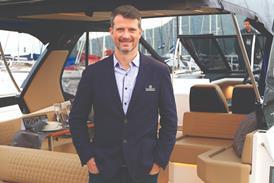
John Depersenaire, director of government affairs for Viking Yachts and founder of the group told the American Boating Congress (ABC), gathered in Washington, DC last week to lobby Congress on this and other issues. “There is an opportunity here to utilise commercial innovation to solve a serious conservation problem,” he said. “We envision a public/private partnership tech race, one that brings to bear all industry and government assets, not just NOAA but [Department of Transportation] and any other agency, federal or state.
“Measures need to be refined, they need to be nuanced, and they need to be science-based. There is an opportunity to do something different and new”
– John Depersenaire, director of government affairs for Viking Yachts
“Measures need to be refined, they need to be nuanced, and they need to be science-based. There is an opportunity to do something different and new,” he said. “The burden of coming up with something different falls upon the industry.”
WAVS has already undertaken projects through its member companies partnering on existing technologies like Risk Terrain Modeling (RTM), a tool used to diagnose environmental conditions that connect spatial habits; using artificial intelligence to evaluate visual and infrared images in conjunction with passive detection (listening underwater) and also active detection using off-the-shelf technology; and radar, which has been used in wildlife research for decades.
“This project will work to develop an algorithm for marine radar units that could be used to detect the whales spout that creates a unique signature in terms of moisture content and heat signature that we think can be helped with radar,” Depersenaire explained.
WAVS member Garmin is working on a way to integrate existing real-time data detection of whales with marine electronics. The database currently populates a website and an app but does not go out to operators. Garmin is trying to bridge that gap.
“What we are going to do is find a way of pushing this out into operators’ multi-function displays, so they can pick these whales up just like any other target,” said Depersenaire.
“NOAA has had a long-standing policy that is very resistant to providing real-time data and information about marine mammals to the public. But if we are expected to avoid whales – which is what we want to do – it certainly helps if we know where they are.”
Depersenaire said WAVS needs other help from NOAA and has asked the agency to assign a liaison to the group since it was formed five months ago.
“We need their assistance in terms of project design and making sure that the work we are doing is carried out with methodology that is accepted by the agency.
“Also, we have requested NOAA to fund and convene a workshop to bring our group and any other experts in this field into the same room to immediately begin working on cooperative research projects such as the ones [discussed here today].”
Finally, Depersenaire was adamant that WAVS “will not be a mouthpiece to push back against the proposed rule,” despite the group’s many criticisms of it.
In an interview with IBI following the panel discussion, he explained: “We’re trying to keep the WAVS group pure in a way. We want to be completely objective. We are going to evaluate technology, come up with all these different solutions and we’re going to make recommendations. And then it’s going to be up to the advocacy experts to then take that and say, ‘this is how we want this work to steer policy making decisions.
“We don’t want them to co-mingle. That was purposefully done.”


LinkedIn
X / Twitter
Facebook
Email us