





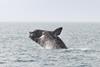
The National Fish and Wildlife Foundation (NFWF) will administer funding for technological advancements to help reduce North Atlantic right whale vessel strikes

The National Fish and Wildlife Foundation (NFWF) – which will administer US$6m in Inflation Reduction Act funding for technological advancements to help reduce North Atlantic right whale (NARW) vessel strikes – has opened the application process and will award the funding in March 2025 – though the money won’t be deliver for an additional two to six months.

The goal of the funding program, explained in a NFWF webinar for potential applicants is “to accelerate development, testing, and implementation technologies and innovations to help further right whale conservation and coexistence with humans.” What it is not is a way to influence or change a proposed National Oceanic and Atmospheric Administration (NOAA) proposed rule limiting speed on the US Atlantic coast for vessels 35ft and above.

The Whale and Vessel Safety Taskforces (WAVS), a group of marine industry and adjacent businesses and organisations, have been calling for technology solutions to the problem, as NOAA itself confesses that speed restrictions alone will not address the issue. It was pressure from WAVS and others that led to a NOAA technology workshop earlier in the year designed to bring various interest groups together to collaborate on solutions. WAVS has also pushed for just this type of government funding.

“The fact that the funds will be awarded in March 2025 is a respectable turnaround time for getting federal money out into the private sector,” WAVS chairman John DePersenaire told IBI in an email following the webinar. “The conservation challenges with NARW are not expected to be resolved even if the proposed rule is implemented as written. Furthermore, there will always be a need for more effective risk reduction tools because it boils down to a safety issue for recreational boats. We will continue to look for ways to make boating safer and the NFWF vessel strike avoidance program should be a positive step in that direction,” said DePersenaire, whose day job is VP of government relations for Viking Yachts.

Under the NFWF timeline, preproposals are due to the agency in mid-June. Proposals that meet the criteria will be invited to the full proposal stage, which are due in September.

“My overall impression is that this program appears to be very focused on the user end (vessel operators) and supporting the development of tools that give mariners the greater ability to avoid striking NARW. I see this as a smart use of federal funds and the best way to engage user groups who have traditionally not been considered in this area of work,” DePersenaire wrote.

One industry complaint with NOAA’s rule making process was a lack of guidance on how successful risk reduction will be measured. This will not be part of the grant awarding process.

“It sounds like NFWF will not be looking explicitly for projects to quantify reduction that is achieved during the project. It sounds like they are most interested in proof of concept, effectiveness of detection and qualitative risk reduction,” DePersenaire said. “I think that was a good response and an appropriate way to handle these projects because NOAA has not specified by how much the proposed rule would reduce risk of vessel strikes to NARW that result in mortality or serious injury, therefore, it would be unrealistic to expect project that explore technology to reduce risk by an exact amount. Consistency was my main concern there and it sounds like we have that.”

NFWF indicated grant amounts will range from US$250,000 to US$750,000.

WAVS and other groups pushing for a holistic approach to a solution involving multiple, integrated technologies and, therefore, different companies collaborating seemed to receive good news during the webinar.

“Those are the questions that we are asking in WAVS and how to best position those who want to seek these funds. It does appear that proposals that include strong collaboration with the marine sector are preferred.”