



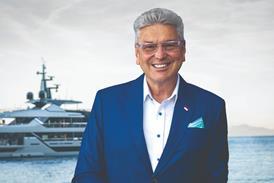

Omër Malaz, the son of a successful Turkish industrialist, founded Numarine in 2002, and blames his father entirely for his addiction to yachting. Malaz senior owned a string of ever-larger Sunseekers, and young Omër was taken to sea from the age of five. It had a positive effect, because when he became a yacht owner himself, he decided he wanted to set up his own boatbuilding company in order to create a series of extraordinary vessels with the motto ‘The boat of your dreams’. The result was Numarine, and the company has enjoyed great success in a remarkably short space of time. It currently has an eight-model line up, producing composite motoryachts from 16m (55ft) to 30m (102ft). And in a bold move into ever larger designs Numarine has just started construction on its first 39m (130ft) — with an owner already waiting. On average, the yard produces 15 medium-sized yachts simultaneously, with a total output of around 50 a year. All of the construction is done in-house with virtually no help from subcontractors.
Numarine also enjoys solid financial backing in the form of the Dubai-based investment consortium Abraaj Capital, which owns a 70 per cent stake in the company. This association has led to a direct route into the lucrative markets of the Middle East. The company’s 35,000m2 factory was purpose-built from scratch in 2003, and is located in the town of Gebze, an hour’s drive from Istanbul on the Asian side of the city.
Unusually, Numarine’s facility is some distance from the sea — in the middle of an industrial zone that specialises in advanced plastic moulding. As such, there is no shortage of skilled labour for the resin infusion processes employed in every model.
Numarine prides itself on being at the very forefront of yacht construction. It aims for the optimum balance between form and function. From the outset, Malaz wanted Italian design, and commissioned the highly experienced Tommaso Spadolini, Can Yalman, and Umberto Tagliavini to establish Numarine’s brand values. The acclaimed British naval architect Tony Castro joined the team later to develop the 68. Whilst stylish and striking design concepts were vital to set the brand apart, the yachts also had to be roomy — and practical.
“Here in Turkey we require much more from our boats than other European owners,” explains Malaz. “We spend long periods away from a marina. We often anchor in water 40m-50m deep and have to contend with strong Aegean winds. “Every experience I’ve gained from being an owner has been funnelled into Numarine.”Advanced production techniques
Malaz also learnt the importance of proper tooling and manufacturing techniques from his father. He therefore insisted that all his yachts would be made from advanced composites to provide lightness with strength — and deliver an easily driven hull. This in turn would need less horsepower, and so lead to lighter and less costly engines. The end result was a far more economical boat — but with no compromise on performance.
Numarine’s hulls are all built using vacuum infusion. From the early 15m (52ft) boats right up to the new range of superyachts, each hull is laid up using PVC foam, unidirectional and multiaxial E glass and Aramid reinforcement.
Vinylester resin is preferred for the sandwich construction due to its resistance to osmosis and general longevity. A grid stiffening system is also used for additional strength, and longitudinal stiffeners run between perpendiculars and transverse buklheads to form a unified structure less likely to flex in a seaway. The bulkheads themselves are made from a PVC closed cell foam. Carbon fibre is employed in high load areas, and the glass to resin ratio is at 60 per cent for optimum strength. Both the hull and deck are post cured to minimise shrinkage.
The other advantage of this type of construction is the working environment. Vacuum infusion can use low-styrene, low-viscocity resins, and with virtually no release of styrene fumes, atmospheric pollution is kept to a minimum. “Unfortunately we work in a dirty industry,” Malaz says, “so at Numarine we alway try to be as clean as possible.” The need for lightness also extends to the internal furniture which is made of veneers over a strong honeycomb stiffener. The weight saved is impressive. On the 16.5m 55 Fly, for example, the honeycomb furniture is over 1,000kg lighter than conventional joinery.
Moving ahead
After establishing the designs and manufacturing processes, development of the range moved fast. In 2004, Numarine invited the German interior specialist Mila to set up a joinery workshop on site. The deal allowed Mila to benefit from the highly skilled Turkish craftsmanship but without the western European labour costs. Numarine was able to use its in-house joinery department to supply a full range of semi-custom interiors on even the smallest vessels in the range.
“We offer semi-custom on every boat,” Malaz explains. “That is core to what we do. We have an in-house designer who will sit with clients and help them choose from literally hundreds of fabrics, woods and wall linings. When we say ‘the boat of your dreams’ we mean it. We make a charge for this interior design service, but customers are always very happy with the results.”
Malaz has a striking 78HT of his own, where the planked wooden floors are painted blue, and the outside of the hull is in bright orange Awlgrip. It is a strangely effective combination. “This is what my wife likes,” he says. “It won’t be to everyone’s taste, but she is happy with it, and happiness with your yacht is important.”
ISO 9001-2000 was achieved two years after foundation, and in 2005, the company invested in a state-of-the-art five-axis milling machine. At the time it was the fourth largest machine of its type in Europe and allowed the company to develop its own precision moulds with tolerances of 0.1mm. To help repay the investment, Numarine offered plug and mould making services for other builders, and amongst its new clients were Pearl Motoryachts of the UK, and Cigarette of the United States. The hull for the Cigarette would eventually become the basis for the high performance Numarine 55 Sport.
Middle East investment
In a sudden jump into superyachts, Numarine moulded its first 102 hull in 2006. This set a new record for the largest vacuum infusion ever undertaken, and proved that large scale vacuum techniques were highly effective. Numarine then scaled back its subcontracting work, and put all its efforts into developing a new range of superyachts.
In 2008, just as the recession was starting to have an impact on the global economy, Numarine entered into talks with Abraaj Capital. Headquartered in Dubai, Abraaj is the largest private equity firm in the Middle East, with assets of US$7.5 billion.
Significantly, it also has a major stake in Art Marine of Dubai, one of the largest luxury yacht distributors in the Middle East. Abraaj eventually bought a 70 per cent stake in Numarine, a deal that not only put the yacht builder on a firm economic footing, but also opened up new outlets through Art Marine.
“Abraaj has a huge amount of clout, and is an investment vehicle for much of the wealth that is based in the UAE,” explains Graham Nisbet, Numarine’s sales director. Previously with Princess Yachts of the UK, he has a wealth of experience in the global market. “The tie-up has worked very well for us. Every three months, the board fly over for a meeting and a tour of the factory. They are all enthusiastic yacht owners, so really appreciate what we are doing here.”
That same year, the first 78 Fly was delivered, targeted at the gap between the 52 (since superseded by the 55) and the 102. Development started on the 78HT, based on the same hull as the 78 Fly, and a new production floor was created to boost capacity for the 78 line, which was already proving a commercial success.
At the same time, Numarine rapidly expanded its market penetration, building a global dealer network to even out the production capability. It now has 13 dealers across Europe, the Americas, Africa, and the Middle East. The Turkish market — with its high proportion of billionaires — is also vitally important.
“The Turkish market is interesting,” Nisbet explains. “The Istanbul boat show is held in November, and is of vital importance to us. “Turks want their new boats delivered and ready to go at the start of the season, usually the beginning of July. It takes around seven months to build a 78, and nine months for a 102. This means we are flat out through the winter, but the pressure eases in the summer. “The opening up of the Middle East market is perfect for us, as customers there don’t need their boats in the summer – it’s just far too hot. So we can fulfil these orders when the Turkish market is quiet, and deliver them to Dubai and Abu Dhabi during the winter boating season — this really helps our production flow.”
Competitive costs
Numarine has a workforce of 345 and only subcontracts the painting of its hulls. “We have our own spray shop, but use Awlgrip specialists as they produce superb results, and offer a full warranty on their work,” says Nisbet. “The hulls are moulded in white gelcoat, so the colours are customised.” Whilst Turkish workers earn less than craftsmen in Europe, Numarine pays them above average wages, and provides a staff canteen with subsidised three-course lunch. Workers are transported to and from their homes by minibus, and there is free healthcare on site. These perks are a deliberate policy to attract the very best workers in the region — and the company says it never has problems with recruitment.
Because the Gebze factory has been built into the side of a hill, the roof of the main moulding hall has been modified to become a third storey — with access at the far end to connect it to Turkey’s improving road network. This third storey is ready for completion, with side pillars supporting the framework for a roof. Should the need arise, the area could very quickly be turned into a fully enclosed hall. The rest of the factory has also been designed to be as adaptable as possible. In the production halls for the 55 and 78, for example, the second storey has a large opening above the production lines, allowing engineering hardware to be assembled and then lowered down into the boats underneath.
The distance from the coast has required the construction of a multi-functional water test facility where hulls are floated to check for hull integrity. A dedicated metal shop produces high quality items in 316 stainless steel, and the joinery workshop is vast. The entire teak deck for a 102 was being painstakingly created in one area as we watched, and complete tree trunks were being carefully sawn up in another. Climate controlled spray booths flank the operation, allowing for fine varnish and lacquer work on finished pieces.
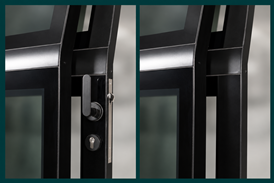
The most unusual facility is the window making section. Malaz avoids using subcontractors wherever possible.
“With subcontractors, you don’t have full control over quality, delivery or cost,” he explains. “I prefer everything to be in-house.” The often complex windows had been made by an outside contractor, but Malaz bought the company and set up the employees and their equipment on site. This means that there are no hold-ups in realising fresh new designs, as the window makers are virtually alongside the hulls being built.
Superyacht strategy
The move into the 40m (130ft) sector is the start of what Numarine hopes will be a quantum shift towards superyachts. The 55 (currently the smallest model in the range) is being superseded by the all-new 68, because larger vessels are seen as more cost effective. As labour is a major part of a project, Turkey’s competitive manpower costs make larger vessels more profitable.
The latest design is the 130WB (wide body) which has no side decks past the saloon. “The 130 WB is a continuation of the philosophy behind most Numarine yachts,” explains designer, Can Yalman. “We’ve taken the aggressive and flowing lines that characterise their unique presence on the water to their extreme.”
Exciting future
Yalman uses inspiration from nature — particularly from the body contours and scales
of sea creatures — to create what he describes as “wild-at-heart” aesthetics. “With the 130, we have used the opportunity of the wide body to create a continuously-shaped side window that gives the yacht an aggressive forward flowing look. The sleek reptilian style gives the 130 a living presence among other yachts in its class. It will look and feel fast even at anchor. It also needs to be practical for leisure, so we have three balconies, a wide beach living area in the stern and plenty of comfortable lounging areas on the flybridge and bow.”
The first 130 is due for launch in 2012 — although getting her to the sea will be a challenge. Malaz’s plan to buy a 14m quayside facility at Tuzla is currently on hold, and moving large vessels requires what amounts to a night-time military exercise using a remarkable 16-axle truck.
But logistics aside, Numarine is a dynamic superyacht yard that has shown just exactly what can be achieved by marrying advanced production techniques, lightweight composites, and world-class craftsmanship, to meet the desires of experienced yacht owners.
It’s certainly a brand we’ll be seeing a lot more of in the future.
Topview: OmËr Malaz
Omër Malaz’s enthusiasm for yachts is infectious. With a keen business mind and a great deal of experience in manufacturing, he has successfully steered Numarine through the global crisis. But how exactly did his yard survive the downturn?
“We were fortunate, because three years ago we teamed up with Abraaj Capital which made our company financially very stable. We also had a lot of back orders. But even so, we still had to tighten our belts. At the depth of the crisis the staff agreed to work a four-day week. This went on until January 2010 when business returned and we’ve been on a five-day week ever since.
Malaz is confident that his new model can succeed. “Last year we launched the 40m 130WB — a wide-bodied design,” he says. “It means we can use the full beam and have an 80m2 saloon. The design is a completely new tri-deck, but we took a lot of clues from our 78HT, which is one of the most gorgeous boats around.
“I have a lot of faith in the 40m range. I think some superyacht owners are having a rethink and may move back down in size.
“People want a large yacht for maximum comfort, but there is nothing on a 50m or 60m yacht that a 40m cannot offer. So I think in the future there will be a lot more interest in the 35m–40m range.”
“The industry has been pretty well sheltered in the last six years because people were happy to pay a lot of money for old tech materials. But I think the yacht industry is still in the dark ages compared with the automotive and software sectors.
“I wanted to bring something new to the table, not only with the advantages of infusion, carbon fibre and sandwich construction, but with modern management style. When I bought the five-axis milling machine, not many companies had one.
“I believe that most yards are scared to invest. But in other industries, investment simply can’t be neglected, or the competition will overtake you.
“We felt that most boats were looking very similar inside – lots of wood panelling and vinyl covers. We are also trying to bring more home styling into boating. We want a homely feel to the boats — just like a waterside apartment. We customise far more than our competitors. The boats you have seen on the water are what customers want — their own uniquely styled ‘dream’ boat.
“We won’t want to change interior bulkheads or any of the engineering, but we do offer a complete interior design service so the client decides what their boat looks like inside — not us.”
“I am also absolutely confident that the crisis is behind us. I don’t think it could have got much worse than it did over the past two years. The US and European markets are now re-emerging for us, where our stylish and yet remarkably practical boats have always been appreciated.
“Looking further afield, I see India as an exciting market, but I am unsure about China. The Chinese don’t seem to enjoy the sunshine as much as we do, so I can’t see how you can own a boat like ours, and not enjoy the sunshine!
“But as I have said, I think the new market will be in the 35m-40m (115ft-130ft)size bracket, for the best combination of comfort and economy — and this is where Numarine will be competing hard in the future on a global scale.


LinkedIn
X / Twitter
Facebook
Email us