




Renowned designer shares his insights on the evolving direction of yacht design

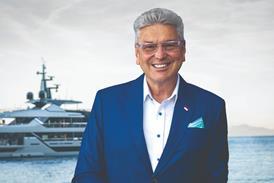
Unlike technology, which evolves progressively through research and innovation, design moves in patterns that must be deciphered. These patterns may be borrowed from other industries, but they are often driven by broader socio‑cultural forces. To explore the current direction of yacht design, we spoke with Tony Castro. His impressive portfolio spans sailing and motoryachts, from superyachts to high‑performance projects including the legendary SB20. Thousands of owners today cruise aboard boats penned by Castro.
The enduring value of a great designer – one whose pencil transcends fashion while remaining innovative, as evidenced by the many awards he continues to receive – lies first and foremost in the ability to listen and interpret: clients above all, but not only.
“To make sure what the future holds is basically to create it, so we have to create the future… and this is probably how the whole yachting industry started. Hundreds of years ago, the first builders tried to make something they thought their customers might not yet know about, hoping they would like it and eventually buy it.”
Industry pioneers often imposed their ideas and concepts on buyers. Today the industry is more customer‑centric.
“In the old days there were few players; now there are thousands, all trying to mix up the industry. It’s a big jungle right now – more confused. But I think we are paying more attention to what users want, and in different areas. We need to be really attentive to customer feedback and understand how they use their boats. A lot of design features are driven by boaters’ needs. Of course, owners themselves have changed a lot, as has the way they use their boats.”

Trend 1: User experience
For Castro, there must always be a direct thread connecting the designer with the end user. That means listening to and interpreting owner feedback, then translating it into the best possible onboard experience. “Nobody needs a yacht, so the only excuse to have one is the pleasure you get from owning it and using it. In the past there was this idea of building beautiful boats, but once inside you weren’t so comfortable. Now comfort is more important.”
The overall approach to life at sea today is more informal, partly because boating has become more accessible and has attracted a wider variety of users. As Castro notes, “There are more younger buyers than ever before. They’re used to a much simpler lifestyle than in the old days – and that goes for life on board, too.”
This informality touches many aspects of onboard life, including the relationship with the crew, leading to the second trend.
Trend 2: Look after your crew
Owners increasingly recognise that high‑quality crew are harder to find and more critical to the success of the onboard experience. “Therefore we must look after them,” says Castro. This is true for private yachts and even more so for charter, where the crew is pivotal to a short, high‑expectation stay, during which everything must be perfect. As a result, crew areas demand smarter space planning with more attention to functionality, comfort, and wellbeing.

Trend 3: Making better use of space
“We also reflected on how space is used on board and realised some areas were underutilised – the bow, for example – so we gave it greater importance. In a number of boats conceived over the last two years, I introduced this amazing windscreen window with a door in the middle. You have this door that disappears into the ceiling, so people can walk through the main deck from the aft and go straight onto the foredeck. Then, on the foredeck you have multi‑style seating arrangements with sofas that slide outwards and forward, as in some Galeon boats, for example. This continuity between spaces on board is increasingly common, particularly on medium and smaller boats.”
Trend 4: Floating homes
Thanks to the comfort delivered by modern yachts – and the technological and design advances that made it possible – “people want to live on their boat rather than navigate with it,” Castro observes. “Boating tends to be more like going to your floating apartment. They don’t go very far, and even sailboats hardly sail. For this reason, boats are beginning to look like floating houses. There is a demand for enormous windows that bring light and a sense of space. Thanks to the development of structural glass, you can now propose floor‑to‑ceiling windows that are safe and certified for yachting.”
Castro believes this is more than a passing fashion: “One of these days, boats will be floating houses, and they might not even go anywhere. They’ll just be anchored somewhere in a beautiful location, perhaps privately. They’ll offer a different feel to users – more stability, little or no noise – and a totally new perspective on boats. They will need to be suitably equipped with waste management and conceived so as not to pollute or negatively impact the surrounding environment.”
That leads naturally to the next theme: the ecological transition. It is not new, but it can no longer be ignored.
Trend 5: The ecological transition –pragmatism over promises
While acknowledging the need to accelerate sustainability, Castro is skeptical of grandiose, long‑term promises that distract from smaller, immediately deployable solutions. “I think we’ve gone a little over the top pressuring certain things and discussing what I call unobtainable, extreme solutions on a long‑term view, while ignoring simpler solutions that could be adopted now. We don’t look enough at the little things we could do today, as they don’t attract as much noise and attention as bold statements about fancy technologies going to revolutionise the world overnight, like hydrogen. And in the meantime, we continue to pollute. Some of these technologies have huge costs and practicality difficulties, not to mention risks. I think that overall, there is much confusion about reducing pollution and/or fighting global warming. These are two different things that we should address separately so that people can better understand and be more easily persuaded to align their lifestyles accordingly.”
The transition is a global, industry‑wide issue, touching every aspect of yachting, including design. Castro cites developments in commercial shipping – where operators are testing technologies to reduce fuel consumption and emissions – as a useful reference, although private yachts are harder to benchmark as they don’t have the same operational profile as commercial ships with steady repeatable destinations from point A to B.
“There’s a technology I’m familiar with that consists of a very small machine delivering a few drops of hydrogen into the air mixture of a combustion engine – cheap and easy to integrate with existing combustion engine solutions. It delivers very large improvements in reducing noxious gases and on top of that you can enjoy some fuel saving.
“Biofuel is an interesting and available alternative that doesn’t demand radical intervention on existing equipment, as is the case with hydrogen. Not to mention the potential danger hydrogen propulsion could represent when installed in an enclosed engine room if a leak was to occur, due to impacts or vibrations. To be considered safe, a hydrogen system should be installed to disperse any eventual leaks fast –as with buses that carry the tanks on the roof. On a yacht you obviously can’t sacrifice the flybridge to make room for massive sized hydrogen tanks, so I do not see that technology as a near‑term practical enough solution.”
For Castro, a pragmatic path to greener boating lies in the widespread adoption of smaller, scalable changes – the use of vegetable fibres and fabrics, greater use of cultivated (responsibly grown) woods, and alternative materials. “These may not attract as much attention as hydrogen projects, but I think they are more valuable because they’re widespread. Many players can adopt them, and together they make a difference.”
Trend 6: reinventing the motorsailer
Castro is convinced there is room today to reinvent the motorsailer concept – a product largely abandoned in recent decades. To sailing purists, it never felt like a ‘real’ sailing boat due to limited performance; to motoryacht lovers, it lacked space and comfort. It was an awkward hybrid that pleased no one.
“If you think about it, it’s a bit like catamarans a couple of decades ago – an aberration for sailors and not interesting for motoryacht enthusiasts. Today they’re a major trend.
“In the same way, motorsailers disappeared 35 to 40 years ago and no one wanted to hear about them. I believe in this concept, we call it ‘Sail-Assisted Motoryachts’ and I have a project ready to present that I believe in strongly.
“These are not sailing yachts designed for racing, and even if they don’t use their sails all the time, they can be very useful when crews move the boats for deliveries, offering meaningful fuel savings and, of course, a less polluting environment – along with a massively improved YETI number (Yacht Environmental Transparency Index, a way to assess the level of eco-friendliness of a yacht’s operational profile).
So I designed these motoryachts with sails. Basically, these boats have the volume of a motoryacht, meaning the owner doesn’t have to compromise on space and they can enjoy travelling in silence… what a joy, I hear you say!”
Reference

ABOUT THE AUTHOR
Francesca Goi is a marketing and communication consultant and Associate Professor at Excelia Business School in La Rochelle, France. Goi has held marketing manager positions at both Brunswick Marine and Sessa Marine, going on to garner extensive experience in luxury management.


LinkedIn
X / Twitter
Facebook
Email us