





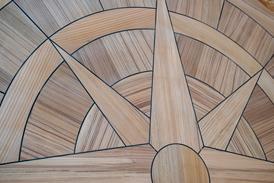



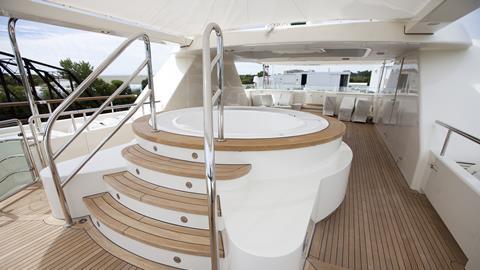
The deck sets the aesthetic tone for any yacht or boat and, chosen wisely, is a highly practical feature pivotal to the use, enjoyment and long-term value of a vessel
Most of us appreciate a deck for its visual aesthetic – a sleek, immaculate surface extending into the distance. But visual appeal is just one consideration, and choosing the wrong material can result in a hazardous surface and costly repairs.
With options ranging from teak to composite materials and cork – and with endless variations of the above – making the right choice demands specialist expertise often beyond the knowledge of even the most seasoned owners, captains, yacht managers and shipyards.
“There are multiple material solutions available,” says Richard Strauss, CEO of Teakdecking Systems. “Selecting the right material really comes down to customer preference and expectations for their vessel. The important thing is to work with a specialist supplier that vets all its materials to ensure they’re of the highest quality.”
Among a host of technical details that need to be factored into the decision are comfort, heat, weight, repairability, maintenance, documentation, sustainability and long-term performance.
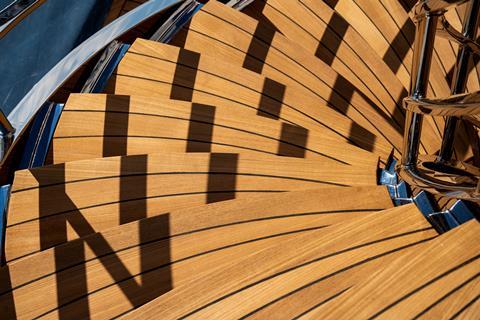
Safety, comfort, resilience and value
Teak has been the surface of choice for centuries and remains the classic benchmark for premium yacht decking. And for good reason. This tropical hardwood has numerous properties to recommend it, including its high silica content, providing natural slip-resistance for a safer surface. Added to this is its capacity to remain comfortable underfoot. Natural oils within the wood protect it from UV, moisture and even insect damage, while teak’s high level of temperature and humidity stability means minimal expansion and contraction once fitted. “Combined with a lifespan of up to 30 years, it means the current crew and owner benefit, but it also becomes a genuine asset when it comes to the resale value of the yacht,” says Strauss.
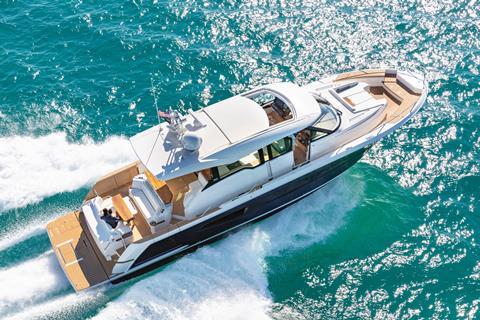
Smart alternatives to teak
Thanks to technology and science, other premium decking options are also available – from composite materials to laminated teak and cork. “We’ve specialised in global marine decking for more than 40 years,” says Strauss. “Part of being a leader is to constantly innovate, and we’ve done that by embracing the latest materials-science and engineering.”
He goes on to list the benefits of composite decking. Engineered to last for up to 20 years with low maintenance required, it’s resistant to warping or fading in extremes of temperature. There are also countless design options, with a variety of colours, patterns and anti-slip finishes available. A premium composite option is Teakdecking’s SeaSole – a unique product that promises cushioned comfort underfoot. Cost-effective, easy to maintain and durable, it’s an excellent choice for refits and OEM builders.
Another increasingly popular choice is cork. Manufactured from cork oak bark, a renewable material, it’s favoured as a more environmentally conscious choice. It’s also highly practical, lightweight, low-maintenance, comfortable underfoot, and has the benefit of thermal insulation and sound-reduction for a quieter environment on board. Laminated teak – or green teak, which is manufactured from plantation-grown teak – is also a more responsible option, as well as a very practical one.
The choice of decking may seem complex, but with expert guidance it becomes an educated decision that not only benefits crew and owner but adds long-term value to any vessel.
Find out more about Teakdecking Systems’ specialist products, or contact its expert team for more information




 LinkedIn
 X / Twitter
 Facebook
 Email us