





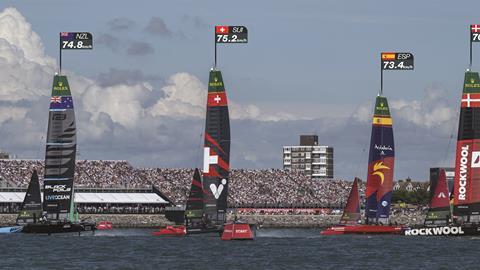
With cutting-edge technology, sustainability initiatives, and star-studded investors, SailGP is redefining the future of competitive sailing. IBI goes behind the scenes to uncover SailGP’s best-kept secret: its UK base of excellence, where innovation and engineering brilliance drive the championship’s success
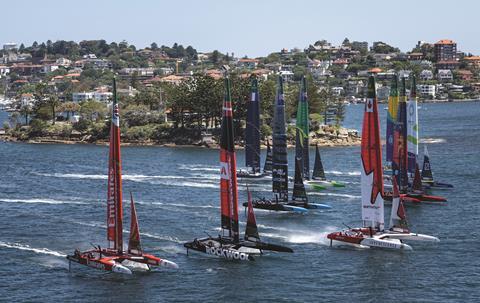
ailGP has taken the world of sailing by storm, with high-powered 50ft catamarans flying across the water in 12 locations globally. Stadium venues bring fans closer to the action, creating an electrifying atmosphere over two days of racing. In Portsmouth, UK alone, 20,000 spectators turned out earlier this summer – a remarkable feat for a sport traditionally seen as less spectator-friendly. Add to this the online and TV audiences, now exceeding 1 million, and the growing interest from investors like Sebastian Vettel and Kylian Mbappé, with team valuations reaching US$60m. This meteoric rise is no accident but the result of a visionary plan launched in 2019 by co-founders Sir Russell Coutts and Oracle’s Larry Ellison. Since then, SailGP has expanded to 12 teams, with 13 set to compete next year and plans for even more.
SailGp Technologies’ best kept secret
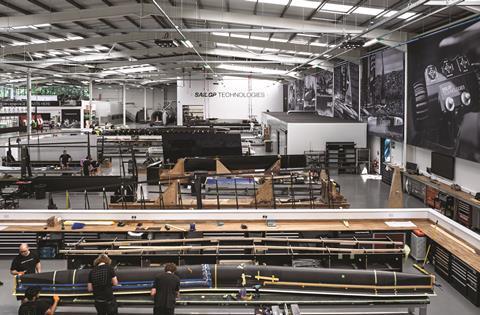
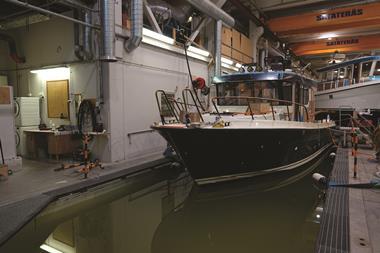
Sandwiched between the M27 motorway, a golf course, and the Hamble hub of British sailing, is a comprehensive technological and engineering endeavour. Imagine all the Formula One teams in one location where they design, build and develop their cars. Immaculately kept, clean and pristine SailGP Technologies, located appropriately at Strategic Park in Hedge End, Southampton, is a shining beacon of light in an ever-darkening UK economic climate.
With 110 employees working in an impressive 86,000ft² (8,000m²) facility, the scale and ambition of the founders are clear. During my visit, I was given a comprehensive tour by Kathryn White, business operations manager, who offered a detailed insight into their operations and how they integrate into the wider marine industry.
SailGP, the most exciting racing on water, consists of a series of races around the world aboard F50 foiling catamarans. These amazing boats, which came from the America’s Cup in Bermuda, are strictly one-design, meaning that their build specification has to be top-notch to enable fair competition for all the teams. The original boats were built in New Zealand, but since 2024, Southampton has taken over all the manufacturing, maintenance, as well as design and development.
A significant amount of maintenance and repair work also takes place onsite at the events, with around 45 of the UK-based build and tech team travelling to each event to ensure any breakages can be repaired immediately, often resulting in night-time working to enable teams to continue racing. That happens most of the time but occasionally – like earlier this season in Sassnitz, Germany – a big failure means the boats are able to come back to HQ for a rebuild.
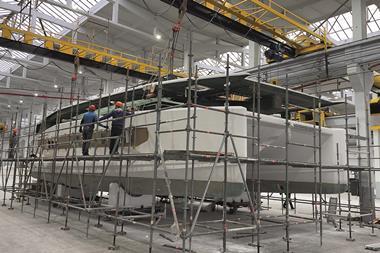
During my visit, I had the opportunity to see Boat 14 under construction, along with repair work on various other boat components. The modular design of these boats allows them to be dismantled and shipped efficiently to events in locations as far-flung as Sydney, New York, and multiple European cities. This approach not only facilitates global logistics but also helps reduce the carbon footprint.
As a truly global championship, SailGP takes place in venues around the world, and the organisation actively works to minimise the environmental impact of travel. They implement offsetting initiatives and limit event travel to essential onsite personnel. Beyond this, SailGP has introduced several commendable sustainability efforts. These include the Impact League, where teams are evaluated each season by an independent panel on sustainability criteria, as well as local green initiatives at each venue. These efforts are among the most comprehensive in the sailing world and are likely to set a benchmark for the future of the sport
Of the 110 workforce, around 30% are from an F1/motorsport background
Other initiatives include carbonfibre recycling, minimising material waste, utilising curing ovens overnight to conserve energy, adopting electric vehicles, and installing rooftop solar panels to power the facility.
The array of equipment is truly impressive, enabling every component of the boats to be designed, tested, and manufactured onsite. This is complemented by collaborations with specialised suppliers, such as Strata, the Mubadala aerospace company based in the UAE, which fabricates the titanium T-foils and vertical supports. Additionally, a new hydraulics facility is currently under construction, while Doyle Sails, now part of the North Technology Group, handles the production of all the jibs. Wing construction also takes place here. Of the 110 workforce, around 30% are from an F1/motorsport background, the UK being the base for most of the F1 teams. Many are completely new to boat building and go through a detailed training programme. The team collaborate with South Hampshire Collage Group, who provide a steady source of students for their apprenticeship scheme. This includes time in work plus time at the Southampton Institute over a three-year period. For the 2025 intake, it consists of three male and three female candidates.
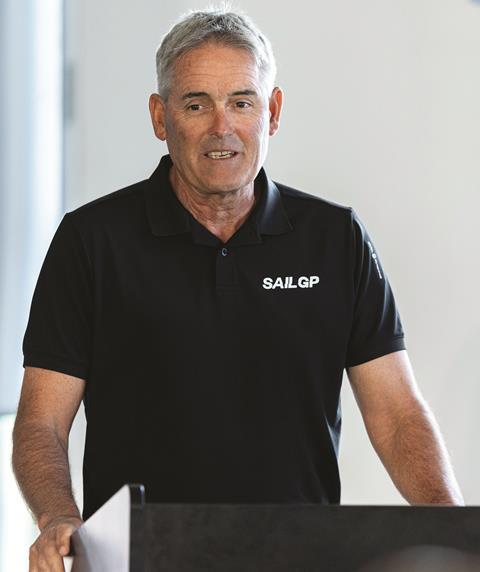
SailGP co-founder Sir Russell Coutts updated IBI on the current status of the racing championship. “We have made progress much more quickly than I dreamed possible,” he told me.
“I am pleased with where we are, but there is so much more we can and want to do,” he continued. “Imagine a breakage on the water and we are able to replace a key part of the boat instantly so that the boat can continue racing. We don’t accept that as we move forward, boats have to sit out racing due to damage. Unless of course it is really catastrophic damage. Imagine in F1, they change tyres and nose cones during pit stops. Why can’t we do that?’ “I would add ‘imagine the unimaginable’, which I believe sums up what SailGP has achieved so far.”
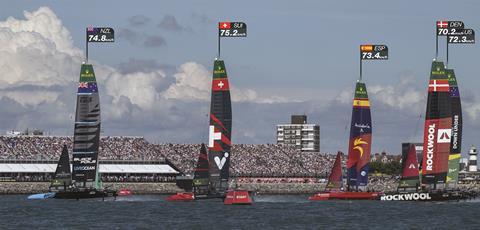
The phrase Russell emphasised most during our interview was ‘Return on Investment’, with a strong focus on delivering value for fans, sponsors, and owners. Since its launch in 2018, SailGP has grown to an impressive 2.6 million followers and over 1 million viewers on YouTube. As the 2025 season draws to a close, the excitement builds toward the Grand Final in Abu Dhabi, where teams will compete for a US$2m prize fund – the largest in the history of competitive sailing.
In F1 they change tyres and nose cones during pit stops. Why can’t we do that?
I asked Russell if his engineering degree had played a role in this particular phase of his career. After a pause, he acknowledged that it had, though from my perspective, his accomplishments seem to stem far more from imagination and determination. Our conversation circled back to Steve Jobs and the iPhone – how it revolutionised the world without the influence of focus groups or groupthink, driven solely by an unwavering commitment to success.
On the SailGP Technologies base in Southampton he said: “I think we’ll need more space soon, even though when we first moved in, I thought it might be too big. This facility is essential to how we operate and will help us develop more quickly.”
The facility’s central location plays a key role in its success, serving as a vital hub within the UK marine industry. It draws on a diverse range of skills, including expertise brought in from F1, as well as talent developed in-house through an apprenticeship program in collaboration with educational institutions like the Southampton Institute.
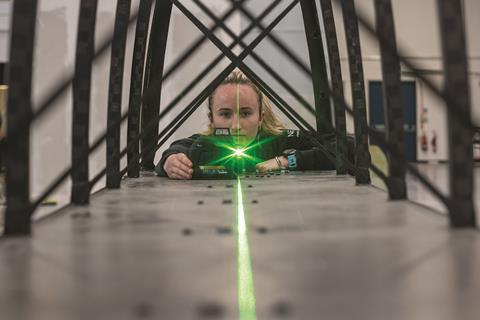
This investment allows SailGP to design, test, and build every component of the F50 cats, including hulls, wing sails, foils, and rudders. Using advanced materials like carbonfibre and other cutting-edge technologies, the team ensures the boats deliver thrilling, reliable racing in all conditions and across a variety of locations. This includes the use of different-sized masts, ranging from 18m to 27.5m, and the development of innovative solutions, such as systems to help the boats foil in even lighter winds – akin to the DRS system in Formula 1.
“This will allow us to race in winds as light as 3 knots, meaning more racing in a wider range of conditions and fewer postponements or cancellations, which no one likes,” Russell explained.
While some traditionalists may see these innovations as controversial – much like T20 cricket’s initial reception – SailGP could similarly revolutionise sailing. T20 brought millions of new fans to cricket, and SailGP could do the same. After all, what other sailing competition generates comparable levels of interest and viewership?

 LinkedIn
 X / Twitter
 Facebook
 Email us